
Affiliate disclosure As an Amazon Associate we earn from qualifying purchases, at no extra cost to you.
Ventilation on a motorcycle helmet is a plumbing problem before it is a comfort feature. Cool air has to enter through intake vents at the brow and chin, travel through channels cut into the EPS liner, sweep across the scalp, and then leave through exhaust ports at the rear where the low-pressure wake behind your head actively pulls it out. When that intake-to-exhaust path is open and unobstructed, a full-face helmet stays bearable in summer heat. When it is blocked, half-hearted, or sealed shut by a closed visor, the same shell turns into a sweat box at the first traffic light. Our research desk treats a helmet's vent count and its exhaust design as the two numbers that matter most for hot-weather riding.
We pulled together seven full-face and modular helmets that list their ventilation hardware in the spec sheet rather than burying it in marketing copy. The GLX GX11 publishes a specific count: three adjustable air intakes and four exhaust outlets, with a wind-tunnel-tested shell shape. The Bell Qualifier ships with the brand's Velocity Flow Ventilation system. The CYRIL pick spreads five named vents across the top, sides, and chin, and the TRIANGLE pick runs a front-to-rear flow-through layout with adjustable intakes. Every helmet here also carries a fully removable, washable liner, which is not a side note in summer. The same airflow that keeps you cool also pushes sweat into the padding, so a liner you can pull out and rinse is what keeps the helmet from turning sour over a hot season. For the broader category, see our guide to the best full-face helmets.
One trade-off runs through this whole list: airflow and quiet pull in opposite directions. Every open intake is also a path for wind noise, so the most aggressively vented helmets are rarely the quietest, and earplugs belong in your pocket regardless of which one you pick. Certification still matters more than vent count. Every helmet here meets or exceeds the DOT FMVSS-218 standard, and no amount of airflow substitutes for a shell that manages an impact. The last variable is the one we cannot put in a table: fit. A helmet that does not seal correctly leaks air in the wrong places and lets cooling channels bypass your scalp entirely, so read our notes on how a helmet should fit before you size one.
Key Takeaways
- Ventilation is an intake-to-exhaust system, not a vent count. Cool air enters at the brow and chin, runs through channels in the EPS liner, and exits through rear exhaust ports pulled open by the low-pressure wake behind your head. A helmet with four front vents and no working exhaust does not flow.
- The GLX GX11 is our overall pick for published airflow. It lists three adjustable air intakes and four exhaust outlets on a wind-tunnel-tested shell, and the fully removable, washable liner handles the sweat that summer airflow drives into the padding.
- Airflow and quiet trade against each other. Every open intake is a path for wind noise, so heavily vented helmets are rarely the quietest. Carry earplugs no matter which helmet you choose.
- A washable liner is a summer requirement, not a luxury. The airflow that cools you also pushes sweat into the padding. Every helmet here has a removable, machine-washable interior so it does not turn sour over a hot season.
- Certification still outranks vent count. Every helmet on this list meets or exceeds DOT FMVSS-218. Ventilation is a comfort feature layered on top of impact protection, never a replacement for it.
| GLX GX11 Full Face Helmet |  |
Best Overall for Airflow | Type: Full-face | Certification: DOT FMVSS-218 | Best for: Riders who want a published vent count for hot-weather use | VIEW LATEST PRICE | Read Our Analysis |
| CYRIL Full Face Helmet |  |
Best Anti-Fog Ventilation | Type: Full-face | Certification: DOT FMVSS-218 | Best for: Riders who fight visor fog and want engineered airflow to clear it | VIEW LATEST PRICE | Read Our Analysis |
| Bell Qualifier Full-Face Helmet |  |
Best Brand-Name Pick | Type: Full-face | Certification: DOT FMVSS-218 | Best for: Riders who want an established brand with airflow | VIEW LATEST PRICE | Read Our Analysis |
| TRIANGLE Full Face Dual Visor Helmet |  |
Best Value | Type: Full-face | Certification: DOT FMVSS-218 | Best for: Budget buyers who want two shields and real airflow | VIEW LATEST PRICE | Read Our Analysis |
| ILM 902 Modular Flip-Up Helmet | 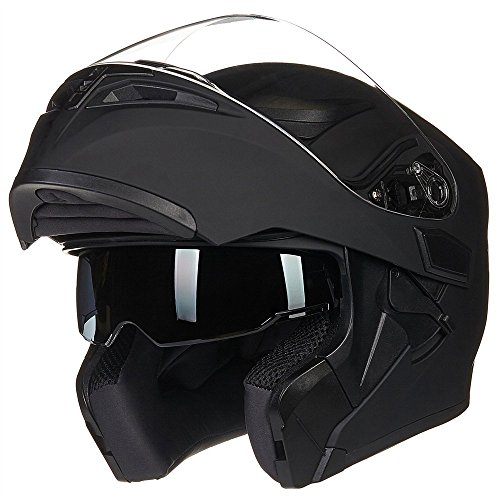 |
Best Modular | Type: Modular (flip-up) | Certification: DOT FMVSS-218 | Best for: Riders who want flip-up convenience plus hot-day venting | VIEW LATEST PRICE | Read Our Analysis |
| ILM 313 Full Face Helmet | 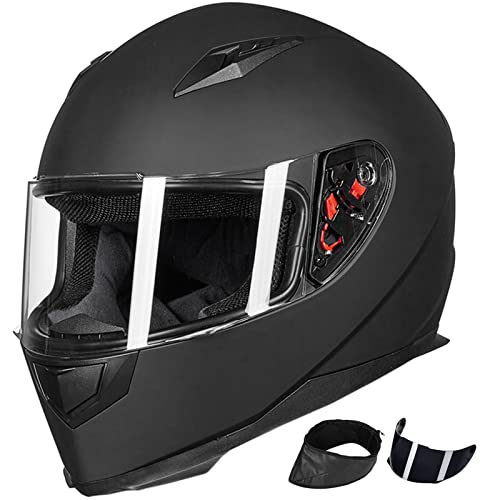 |
Best All-Season Value | Type: Full-face | Certification: DOT FMVSS-218 | Best for: Riders who want one helmet across summer and cold months | VIEW LATEST PRICE | Read Our Analysis |
| Loyoriwy Retro Full Face Helmet |  |
Best Retro Style | Type: Full-face (retro) | Certification: Meets stated safety standards | Best for: Cruiser and scooter riders who want vintage looks with airflow | VIEW LATEST PRICE | Read Our Analysis |
More Details on Our Top Picks
GLX GX11 Full Face Helmet
GLX has been building budget full-face helmets out of Southern California since 2002, and the GX11 is the rare helmet in this price bracket that puts an exact vent count on the spec sheet: three adjustable air intakes and four exhaust outlets. That ratio matters. More exhaust ports than intakes is what lets the helmet pull warm air out of the rear wake rather than letting it stagnate around the crown, which is the design detail that separates a helmet that flows from one that just has holes in the front.
GLX describes the shell shape as wind-tunnel-tested, and the practical payoff is twofold. A clean aero profile reduces buffeting on the highway, and it also keeps the exhaust ports sitting in the low-pressure zone where they do their job. The intakes are adjustable, so on a cold morning you can close them down and run the same helmet through the shoulder seasons rather than swapping for a winter lid.
The interior is fully removable, washable, adjustable, and replaceable, which is the feature we weight most heavily for a summer helmet. Airflow drives sweat into the padding, and a liner you can pull out and rinse is what keeps the helmet from developing an odor over a hot season. The shield uses a quick-change mechanism and adds reinforcing ribs for rigidity across a wide field of view.
The honest limitations are the ones common to this price tier. Certification is DOT only, with no Snell or ECE lab test on file, so you are trusting the manufacturer's self-certification. And the same open intakes that move air also let in wind noise, so this is not a quiet helmet at highway speed. For hot-weather commuting where airflow is the priority, that is a reasonable trade.
- Type:Full-face
- Certification:DOT FMVSS-218
- Ventilation:3 adjustable air intakes, 4 exhaust outlets
- Shell:GLX shell molding, multi-density EPS liner
- Liner:Fully removable, washable, adjustable
- Best for:Riders who want a published vent count for hot-weather use
CYRIL Full Face Helmet
The CYRIL pick is built around a 5-point aero-ventilation system: two adjustable intakes on top, two exhaust ports on the sides, and a dedicated chin vent. That is a named, countable vent layout in the same spirit as the GLX GX11's published numbers, rather than a generic multiple-vents claim. CYRIL engineers the airflow specifically to fight fogging, pushing fresh air across the inside of the shield so it does not cloud up in humid air or slow traffic.
The second headline feature is a tool-free dual visor system. The helmet ships with a clear shield already installed for night and all-weather riding, plus a second tinted shield in the box for daytime glare, and the quick-release mechanism is built to swap between them without tools. That is a different approach from the internal drop-down sun shield on the ILM 902 pick: two full shields you swap by hand instead of one shield with a flip-down layer built in.
CYRIL lists the shell at approximately 3.3 pounds (1.5 kilograms) over a high-density EPS buffer layer, making it one of the lighter helmets in this lineup, and a lighter shell matters most on the long, hot rides where ventilation is already doing its job. The interior lining is a moisture-wicking, hypoallergenic fabric that is fully removable and machine-washable, secured with a quick-release safety buckle. The helmet is offered in five sizes from S to XXL and ships with a drawstring storage bag.
The cautions match the rest of this budget tier. Certification is DOT only, with no independent Snell or ECE test on file. CYRIL's own listing pitches the helmet for both daily commuting and track use, and that broad framing is marketing reach more than a specialization claim, so riders should judge it as a ventilated street helmet first. Since the second shield is meant to be swapped in by hand, keep it in the included storage bag when it is not mounted so it does not get scratched loose in a saddlebag.
- Type:Full-face
- Certification:DOT FMVSS-218
- Ventilation:5-point aero-ventilation: 2 top intakes, 2 side exhausts, 1 chin vent
- Shell:Lightweight build (about 3.3 lbs / 1.5 kg), high-density EPS buffer layer
- Visor:Tool-free dual visor, pre-installed clear plus bonus tinted shield
- Best for:Riders who fight visor fog and want engineered airflow to clear it
Bell Qualifier Full-Face Helmet
Bell is one of the oldest names in helmets, and the Qualifier is the model that puts the brand's engineering within reach of a budget. Its ventilation runs through the Velocity Flow Ventilation system, Bell's branded intake-and-exhaust layout tuned to move air across the head and out the rear. Buying from an established manufacturer does not change the physics of airflow, but it does mean the vent design has been refined across many model generations rather than copied once.
The NutraFog II shield uses Bell's ClickRelease mechanism for fast, tool-free shield swaps, and it is treated to resist fogging, anti-scratch, and UV. Fog resistance pairs naturally with ventilation: airflow across the inside of the visor is the first line of defense against fogging, and an anti-fog coating is the backup for slow traffic and cold, damp mornings when air is not moving fast enough.
The shell is a lightweight polycarbonate-and-ABS construction, and a lighter helmet reduces neck fatigue on the long summer rides where ventilation matters most. The Qualifier carries DOT approval and meets the FMVSS 218 standard. It ships with a clear shield, with a tinted option available separately for riders who want one.
The trade-offs are worth stating. The Qualifier is an entry-level Bell, so the airflow, while well-engineered, is not at the level of the brand's flagship touring helmets. It is also a single-shield helmet out of the box, so there is no internal drop-down sun visor as on the ILM 902 pick. For riders who specifically want a recognized brand name backing the airflow design, it is the natural pick on this list.
- Type:Full-face
- Certification:DOT FMVSS-218
- Ventilation:Velocity Flow Ventilation system
- Shell:Polycarbonate/ABS, lightweight construction
- Visor:NutraFog II ClickRelease, tool-free swap
- Best for:Riders who want an established brand with airflow
TRIANGLE Full Face Dual Visor Helmet
The TRIANGLE full-face is the value pick, and its ventilation case rests on four strategically placed air intakes feeding exhaust vents, a layout TRIANGLE positions as all-weather rather than summer-only. The four-intake count is generous for the price, and the front-to-rear path is designed to both cool the rider and cut down on the visor fogging that closed full-face helmets suffer in damp conditions.
The standout value is in the box. The helmet ships with a pre-installed tinted shield plus a bonus clear visor on a tool-free quick-release system, so you get both bright-day and night-riding shields without a separate purchase. A carrying bag is included as well. For a rider assembling summer gear on a budget, getting two shields and storage bundled in is a real cost saving over buying shields separately.
Construction is a rugged ABS shell over energy-absorbing EPS, and the interior is fully removable and machine-washable with moisture-wicking sponge padding. As with every helmet here, that washable liner is what keeps a heavily ventilated summer helmet from turning sour, and TRIANGLE offers four sizes from S to XL to dial in fit.
The limitations are the ones you accept at this price. Certification is DOT only, with no independent lab test on file. The ABS shell and sponge padding are entry-level materials, so this is a helmet to size carefully and replace on schedule rather than a long-haul flagship. Sizing runs to head circumference, so measure before ordering rather than guessing from a clothing size.
- Type:Full-face
- Certification:DOT FMVSS-218
- Ventilation:4 air intakes plus exhaust vents
- Shell:ABS shell, energy-absorbing EPS
- Visor:Quick-release tinted plus bonus clear shield
- Best for:Budget buyers who want two shields and real airflow
ILM 902 Modular Flip-Up Helmet
The ILM 902 is our modular pick, and its biggest cooling feature is structural: the flip-up chin bar. At a stoplight or a slow crawl through traffic, lifting the chin bar opens the entire front of the helmet to outside air, which is a cooling option no fixed full-face can offer. For stop-and-go summer commuting, that ability to vent the whole face on demand is more valuable than another intake port. For a broader look at helmets built around heat management, see our best hot-weather motorcycle helmet guide.
Riding closed, the 902 runs a dual-visor system with an internal drop-down sun shield, anti-scratch and anti-fog treatment, and a wide field of view. The anti-fog coating earns its keep on a modular helmet, because the chin-bar hinge area is a place where airflow can be less consistent than on a one-piece shell, making fog management more important.
The shell is high-resistance ABS with a micrometrically adjustable strap, and the liner and cheek pads are lightweight, soft, removable, and washable. ILM offers the model in six colors. The micrometric strap is a convenience worth flagging for a helmet you will be opening and closing repeatedly through a hot day, since it re-seats faster than a double-D ring at every stop.
The modular trade-offs apply. A flip-up chin bar is a hinge, which adds weight and a potential noise and leak point compared with a one-piece full-face, and certification here is DOT only. The convenience of opening the helmet at every stop is the reason to choose it, but riders chasing the absolute quietest or lightest summer helmet will be better served by a fixed full-face from this list.
- Type:Modular (flip-up)
- Certification:DOT FMVSS-218
- Ventilation:Vented shell with flip-up chin bar for airflow
- Shell:High-resistance ABS
- Visor:Dual visor, anti-scratch, anti-fog, wide view
- Best for:Riders who want flip-up convenience plus hot-day venting
ILM 313 Full Face Helmet
The ILM 313 makes the list because ventilation is not only a summer concern, and this helmet is built to flex across the seasons. It ships with two shields, clear and smoked, plus a removable winter neck scarf. In summer you run the helmet open and vented with the smoked shield against glare; when the temperature drops you fit the neck scarf to block the cold air that the same ventilation path would otherwise funnel down your collar.
The shell is a lightweight, durable ABS with a streamlined aerodynamic profile that ILM tunes to reduce wind noise and drag. A clean aero shape helps ventilation indirectly: a helmet that tracks smoothly in the airstream keeps its rear exhaust ports sitting in clean, low-pressure air where they extract heat most effectively, rather than in turbulent wake.
Practical details round it out. The shield uses a quick-release clasp for fast swaps between the clear and smoked options, and the inner lining pads are removable for cleaning, the standard requirement for any helmet that sweats in summer use. The two-shield-plus-scarf bundle is the value story here, covering bright days, night riding, and cold-weather commuting in one purchase.
The cautions match the segment. Certification is DOT only, with no Snell or ECE test on file, and the ABS shell sits at the budget end of the materials range. The removable neck scarf addresses cold air rather than rain, so it is a comfort accessory and not weatherproofing. As an affordable do-everything helmet it earns its place; as a dedicated summer race lid it would not be the first choice.
- Type:Full-face
- Certification:DOT FMVSS-218
- Ventilation:Aerodynamic vented shell, dual shields
- Shell:Lightweight ABS
- Visor:Clear plus smoked shields, removable neck scarf
- Best for:Riders who want one helmet across summer and cold months
Loyoriwy Retro Full Face Helmet
Retro full-face helmets often sacrifice ventilation for clean vintage lines, so the Loyoriwy earns its spot by keeping a working airflow system inside the period-correct shape. It runs multiple air intakes and exhaust ports designed to keep air moving across the scalp, wick away sweat, and prevent the overheating that vintage-styled helmets are notorious for during summer rides. The styling is the draw; the functioning vents are what make it usable in July rather than just at a bike show.
The construction pitch is a high-strength composite shell with a waterproof design and sealed seams, which adds a weather dimension most budget full-face helmets skip. The waterproofing matters for a helmet aimed at cruiser and commuter use, where you ride in whatever the day brings, and it pairs with the ventilation to make the helmet workable across both hot and wet conditions.
At roughly three pounds it is on the lighter side for a full-face, which reduces neck strain on the long, slow cruiser rides this helmet is styled for. Loyoriwy lists fitment by head circumference across M, L, and XL, with a clear instruction that the helmet runs large and should be sized down for a snug fit, which is the single most important note for getting this one right.
The honest cautions are the heaviest on this list. The listing states the helmet meets stated safety standards without naming a specific DOT or ECE certification, so the impact protection is less independently verifiable than the DOT-marked helmets above. Retro full-face shells also tend toward a more closed face shape that can flow less air than a modern sport shell, so treat this as a style-first pick where ventilation is the bonus rather than the headline.
- Type:Full-face (retro)
- Certification:Meets stated safety standards
- Ventilation:Multiple air intakes and exhaust ports
- Shell:High-strength composite, waterproof design
- Weight:Approx. 3 lbs
- Best for:Cruiser and scooter riders who want vintage looks with airflow
How to Choose a Ventilated Motorcycle Helmet
Ventilation is the feature most easily oversold and most easily faked. A row of vents molded into the front of a shell looks like airflow but does nothing unless air has a channel to travel through and an exhaust port to leave by. Here is what our research desk looks at when we judge whether a helmet actually breathes.
Read the Intake-to-Exhaust Ratio, Not Just the Vent Count
A helmet with four front intakes and no working rear exhaust is a marketing helmet. Airflow needs somewhere to go. The exhaust ports at the rear sit in the low-pressure wake behind your head, and that pressure difference is what actively pulls warm air out. Look for helmets that name both intakes and exhausts, the way the GLX GX11 lists three intakes and four exhausts. More exhaust capacity than intake is a sign the designer understood the physics.
Check That Vents Are Adjustable and Channels Are Real
Adjustable intakes let you close the airflow down in cold weather and open it on a hot day, turning one helmet into a three-season helmet. Just as important is whether the EPS liner has channels carved into it to route air across your scalp. Without those channels, air entering the front vent hits a solid foam wall and stalls. You cannot always see the channels in a product photo, but a manufacturer that mentions a flow-through or channeled design is telling you they exist.
Weigh Airflow Against Noise
Every open vent is also a path for wind noise, which is why the most aggressively ventilated helmets are rarely the quietest. This is a genuine trade-off, not a flaw. Decide which matters more for your riding: a commuter battling summer heat will prioritize airflow, while a highway tourer may close the vents and reach for earplugs. There is no helmet that maximizes both at once.
Insist on a Removable, Washable Liner
The same airflow that cools you drives sweat into the padding. In summer that padding gets soaked and, without cleaning, sour. A fully removable, machine-washable liner is not a luxury on a ventilated helmet; it is the feature that keeps the helmet usable across a hot season. Every helmet on this list has one. Treat its absence as a dealbreaker.
Do Not Let Vents Distract From Certification and Fit
Ventilation is a comfort feature layered on top of the helmet's real job, which is managing an impact. Every helmet here meets DOT FMVSS-218, and certification should always come before vent count in your decision. Fit matters just as much: a helmet that does not seal correctly lets cooling channels bypass your scalp and leaks air in the wrong places. Before you commit to any helmet, read our guide on how a helmet should fit, and if you are still weighing helmet styles, start with the best full-face helmets overview.
Ventilated Motorcycle Helmet Comparison
| Helmet | Type | Certification | Ventilation | Best For |
|---|---|---|---|---|
| GLX GX11 Full Face Helmet | Full-face | DOT FMVSS-218 | 3 adjustable air intakes, 4 exhaust outlets | Best Overall for Airflow |
| CYRIL Full Face Helmet | Full-face | DOT FMVSS-218 | 5-point aero-ventilation: 2 top intakes, 2 side exhausts, 1 chin vent | Best Anti-Fog Ventilation |
| Bell Qualifier Full-Face Helmet | Full-face | DOT FMVSS-218 | Velocity Flow Ventilation system | Best Brand-Name Pick |
| TRIANGLE Full Face Dual Visor Helmet | Full-face | DOT FMVSS-218 | 4 air intakes plus exhaust vents | Best Value |
| ILM 902 Modular Flip-Up Helmet | Modular (flip-up) | DOT FMVSS-218 | Vented shell with flip-up chin bar for airflow | Best Modular |
| ILM 313 Full Face Helmet | Full-face | DOT FMVSS-218 | Aerodynamic vented shell, dual shields | Best All-Season Value |
| Loyoriwy Retro Full Face Helmet | Full-face (retro) | Meets stated safety standards | Multiple air intakes and exhaust ports | Best Retro Style |
DOT vs ECE vs Snell vs MIPS, how to pick the right lid in 60 seconds, and when to replace it. One page, no fluff.
Frequently Asked Questions
Do more vents always mean a cooler helmet?
No. Vent count alone is misleading. Airflow only works if intake vents feed channels carved into the EPS liner and the warm air can escape through rear exhaust ports. A helmet with four front intakes and no functioning exhaust will stall the air against the liner. Look for a named intake-to-exhaust ratio, ideally with as much or more exhaust capacity than intake, the way the GLX GX11 lists three intakes and four exhausts.
Are ventilated helmets noisier than sealed ones?
Generally yes, and it is an unavoidable trade-off. Every open vent is also a path for wind noise, so the most aggressively ventilated helmets are rarely the quietest. You can manage this by closing adjustable intakes at highway speed and wearing earplugs. Decide which matters more for your riding before you buy: airflow for hot commuting, or quiet for long highway miles.
Does a closed visor stop ventilation from working?
It changes it. A closed visor blocks the largest air path, so on a hot day at low speed many riders crack the visor open for face airflow. The shell's intake and exhaust vents still flow with the visor down, which is why a true intake-to-exhaust system matters: it keeps air moving across your scalp even when the visor is shut against rain or wind. Several helmets here pair shell vents with anti-fog shields precisely because closed-visor airflow helps prevent fogging.
Why does a washable liner matter for a ventilated helmet?
Because the airflow that keeps you cool also pushes sweat into the padding. In summer that liner gets soaked and, without cleaning, develops an odor and breaks down faster. A fully removable, machine-washable liner lets you rinse the padding and keep the helmet fresh across a hot season. Every helmet on this list has one, and we treat its absence as a dealbreaker for a summer helmet.
Is a vented helmet still safe in a crash?
Vents do not meaningfully reduce a helmet's impact protection when the shell is properly certified. Every helmet on this list meets or exceeds the DOT FMVSS-218 standard, and ventilation is engineered around the EPS liner rather than at the expense of it. The thing to watch is certification level, not vent count: prioritize a clearly DOT-marked (or better, Snell or ECE-tested) shell, and remember that correct fit matters as much as the standard on the label.
