
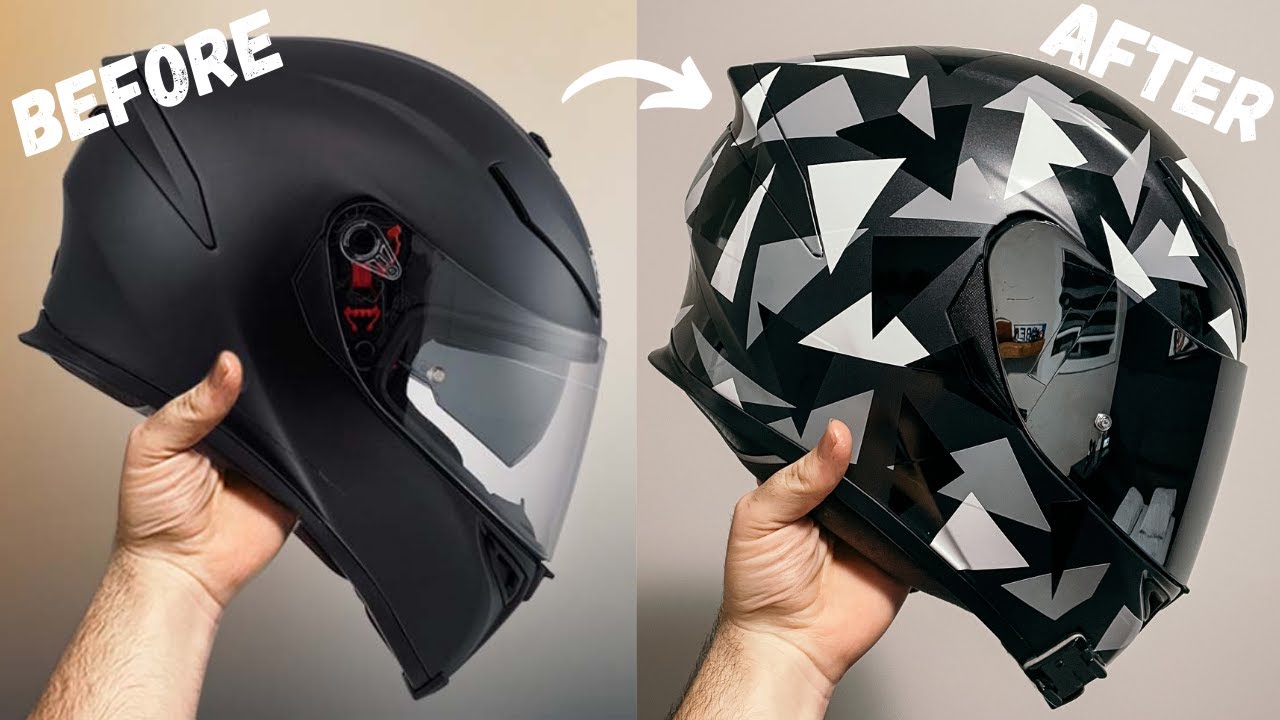
Safe helmet customization means adding to the outside without touching the structure inside. Swapping visors, fitting a comm system, applying vinyl decals and adding a chin curtain are all fine. Spray-painting with solvent-based paints, drilling the shell or using harsh adhesives on the EPS liner are not: they can degrade the materials that protect you without leaving any visible trace.
The urge to personalize a helmet is almost universal. The problem is that most guides on this topic skip the part where certain popular techniques (particularly aerosol painting) can silently compromise the very thing standing between your skull and the pavement. Our research desk dug into the chemistry, the manufacturer warnings and what experienced riders have learned the expensive way, and separated the genuinely safe options from the ones that look fine until they are not.
A motorcycle helmet is not a canvas. The outer shell (usually polycarbonate or fibreglass composite) and the EPS foam liner underneath are engineered to work together in a crash. Anything that attacks the shell material or the adhesives bonding the layers weakens that system without necessarily leaving a mark you can see. The good news is that there are plenty of ways to make your lid look exactly how you want it. You just need to know which path is safe and which is not.
Visor and Pinlock swaps
Swapping a clear visor for a tinted or mirrored one (or fitting a Pinlock anti-fog insert) is the cleanest, safest customization available. No chemicals touch the shell or liner, nothing structural changes, and you can reverse it in two minutes. Most helmet manufacturers sell visors as genuine accessories for exactly this reason: it is a known quantity that does not affect the certification.
A few practical notes from owner reports: stick with visors made or approved for your helmet model, since clip geometry varies by brand and a slightly wrong fit can cause the visor to unseat in a crash. Aftermarket universal visors are common on marketplace sites and often have a poor seal around the edges. That is not a safety disaster, but it is enough to let in wind noise and rain at speed.
Fitting a communication system
Bluetooth intercom units from Cardo, Sena and similar brands are designed to be fitted to helmets. They clip or clamp to the outer shell using the speaker channels cut into most modern lids, and the speakers sit inside against the ear recesses in the comfort liner. Done correctly, this is fully safe and reversible.
The key rule is to use the adhesive mounts supplied with the unit rather than drilling through the shell. A hole in the shell is a stress concentration point that can become a crack initiator in a crash, and it permanently voids the helmet's certification. Adhesive mounting pads hold firmly to a clean, dry shell surface without compromising the structure. Our guide to installing a Cardo intercom walks through the correct approach for the most popular units.
Decals, stickers and vinyl wraps
Vinyl decals and stickers are the most popular surface customization, and when done right they are harmless. The key phrase is helmet-safe vinyl: pressure-sensitive vinyl that uses a solvent-free adhesive. Most automotive and graphics-supply films (3M, Avery Dennison) qualify. What to avoid: stickers with aggressive solvent-based adhesives that could wick through small cracks in the finish and reach the shell material.
Application tips that matter: clean the surface with isopropyl alcohol, not acetone or lacquer thinner (both are solvents that attack polycarbonate and fibreglass). Apply at room temperature. Avoid using a heat gun at high settings near the EPS-side areas of the shell. Gentle warmth to help the vinyl conform is fine, but sustained heat directly on the shell surface can cause micro-changes in the material over time.
A full vinyl wrap or a hydrographic (hydro-dip) finish applied by a professional using helmet-safe primers is the right way to completely re-skin a helmet without touching a spray can. Several custom shops specialize in this specifically because it avoids the solvent problem. The result looks painted, lasts well and does not interact with the shell material the way aerosols do.
Painting your helmet: the risk most guides skip
Painting is where the trouble starts, and it is worth being direct about why. Standard aerosol spray paints, primers, lacquers and clear coats use solvent carriers (acetone, xylene, MEK and similar compounds) to keep the pigment in suspension and help it bond to surfaces. Many of those same solvents attack the polymers used in helmet shells, particularly polycarbonate. They can cause micro-cracking, softening or delamination of the shell, and because the damage is often invisible and subsurface, you will not know it has happened until the helmet is stressed in a crash.
The same solvents can reach the EPS foam if they find a path through the shell surface, either through pores in the material or via the shell-liner interface. EPS is even more sensitive to solvents than polycarbonate, and a degraded EPS liner absorbs impact differently than an intact one.
If you want a painted finish, the safe options are:
- Water-based acrylic paints only, applied in thin coats with no solvent-based primer or clear coat underneath or on top. The colour will be less durable than a rattle-can respray, but it will not attack the shell.
- Professional vinyl wrap: looks painted, fully reversible, no solvents involved. Our top recommendation for any dramatic colour change.
- Professional hydrographic / hydro-dip: specialist shops apply a water-transfer film over a base coat. When done by a shop experienced with helmet substrates and using helmet-safe base coats, this avoids the solvent problem entirely.
Comfort liners, chin curtains and breath guards
Swapping the comfort liner is one of the best functional modifications you can make, not just for personalization but because a worn liner that has compressed changes the fit and reduces protection. Before you swap, see our guide on how to clean a motorcycle helmet properly - a well-maintained liner lasts significantly longer than a neglected one. Most helmet manufacturers sell replacement liners in different thicknesses, so you can fine-tune the fit after the initial break-in compression or replace a liner that has degraded from sweat and use.
Chin curtains and breath deflectors clip or velcro into the chin bar area without contacting the structural parts of the helmet. They are designed as accessory items by the manufacturers and are completely safe to add or remove. If you ride in cold or wet conditions and wind noise or cold air has been the reason you have been reaching for the wrong helmet, this is the lowest-risk fix available.
Camera and GPS mounts: why drilling is never the answer
Action cameras, GPS units and intercom control pods are all popular bolt-ons, and all of them can be mounted safely using adhesive pads without drilling. Action camera adhesive mounts (the standard GoPro base, for example) hold to clean shell surfaces well within the force limits of any normal head movement. They will release before they damage the helmet if a camera is snagged, which is actually a better outcome than a rigid bolt-through connection.
Drilling a hole through the shell for any mount is not an acceptable alternative. Drilling removes material, creates a stress concentrator, opens a path for moisture and (as covered in the painting section) opens a channel through which solvent-based adhesives can reach the EPS liner. Certification bodies do not test drilled helmets, and manufacturers universally void the warranty for any structural modification. This is a line the Research Desk is not going to hedge on: no drilling, ever, for any mount.
General rules before you customize anything
- Test any adhesive, paint or chemical on a small, hidden area first and wait 24 hours before proceeding. Look for softening, tackiness, discolouration or any change in surface texture.
- Never apply any substance to the EPS liner directly. Interior modifications are limited to manufacturer-approved comfort liner swaps.
- Keep solvents entirely away from the helmet. This includes cleaning agents, petrol, chain cleaner and tyre dressing sprays that can drift onto a visor and then be wiped with a rag, carrying solvent residue across the shell.
- After any customization, check that the visor still seals, the retention system still functions, and the lining is still correctly seated. Customization that changes the interior geometry changes the fit.
- If you are ever in doubt about whether a helmet that has been painted, repaired or modified is still structurally sound, read our guide to when to replace a motorcycle helmet. The replacement threshold is lower than most people think. If you are shopping for a replacement, our guide on how to spot a fake motorcycle helmet is worth reading before you buy.
Customization options at a glance
| Customization | Safe? | Key notes |
|---|---|---|
| Visor swap (tinted, mirrored, clear) | Yes | Use visors made or approved for your helmet model. Aftermarket universal visors often seal poorly. |
| Pinlock anti-fog insert | Yes | Fully reversible, no solvents, no structural contact. |
| Bluetooth / intercom unit | Yes (with adhesive mounts) | Never drill the shell. Use slim speakers supplied with the unit. |
| Vinyl decals and stickers | Yes (with solvent-free vinyl) | Clean with isopropyl alcohol, not acetone. Avoid excess heat gun near the shell. |
| Full vinyl wrap (professional) | Yes | Best option for a complete colour change. No solvents on the shell. |
| Hydrographic / hydro-dip (professional) | Yes (specialist shops only) | Use a shop experienced with helmet substrates and helmet-safe base coats. |
| Replacement comfort liner | Yes | Stick to manufacturer or approved fitment. Available in different thicknesses to adjust fit. |
| Chin curtain / breath deflector | Yes | Clips in without modifying structure. Manufacturer accessory category. |
| Reflective tape (exterior) | Yes | Automotive-grade or helmet-specific adhesive only. |
| Adhesive action camera / GPS mount | Yes | GoPro-style adhesive bases are fine. Do not use screw-through mounts. |
| Aerosol spray paint (solvent-based) | No | Solvents attack the shell and EPS liner, causing invisible damage. Voids certification. |
| Solvent-based primer or clear coat | No | Same problem as aerosol paint. Even a water-based colour coat over solvent primer still reaches the shell. |
| Drilling the shell for any mount | No | Creates stress concentrators, opens paths for moisture and solvents. Voids certification permanently. |
| Applying chemicals to EPS liner directly | No | EPS is highly solvent-sensitive. Interior modifications mean comfort liner swaps only. |
DOT vs ECE vs Snell vs MIPS, how to pick the right lid in 60 seconds, and when to replace it. One page, no fluff.
Frequently Asked Questions
Can I spray paint my motorcycle helmet?
Only with water-based acrylic paints and no solvent-based products. Standard rattle-can spray paint, primers and lacquers use solvents that can attack the polycarbonate or fibreglass shell and potentially reach the EPS foam liner, causing invisible structural damage. The safer alternatives for a painted look are a professional vinyl wrap or a hydrographic finish applied by a shop experienced with helmet substrates.
Will stickers damage my helmet?
Vinyl stickers with solvent-free pressure-sensitive adhesive are safe on helmet shells. Avoid stickers with aggressive solvent-based adhesives. Clean the surface with isopropyl alcohol before applying, not acetone or lacquer thinner, which are solvents that can attack the shell material.
Can I drill my helmet to mount a camera?
No. Drilling removes material from the structural shell, creates a stress concentration point that can initiate cracking in a crash, and voids the helmet's safety certification. Adhesive mounts (the kind used for GoPro cameras and similar devices) hold securely and are the correct solution.
Is it safe to add a Bluetooth intercom to my helmet?
Yes, when fitted using the adhesive mounts supplied with the unit. Units from Cardo, Sena and similar brands are designed to clamp or stick to the outer shell without modifying its structure. The speakers sit in the ear recesses inside the comfort liner. Our guide to installing a Cardo intercom covers the full process.
Does customizing my helmet void its safety certification?
It depends on what you do. Reversible additions like visor swaps, adhesive-mounted accessories and stick-on vinyl decals do not affect certification. Anything that contacts the shell with solvents (spray paint, solvent-based adhesives, lacquer thinner used as a cleaner) or that physically modifies the shell (drilling, sanding through the finish) will void the certification and may leave the helmet structurally compromised.
